Ground improvement in Guelph encompasses a suite of geotechnical techniques designed to enhance the engineering properties of soil and rock for construction. This category covers methods that increase bearing capacity, reduce settlement, mitigate liquefaction potential, and improve slope stability. In a city like Guelph, where urban expansion meets complex glacial geology, these solutions are not optional extras but essential prerequisites for safe and durable infrastructure. From residential subdivisions to industrial parks, the ability to modify ground conditions directly influences project feasibility, cost, and long-term performance.
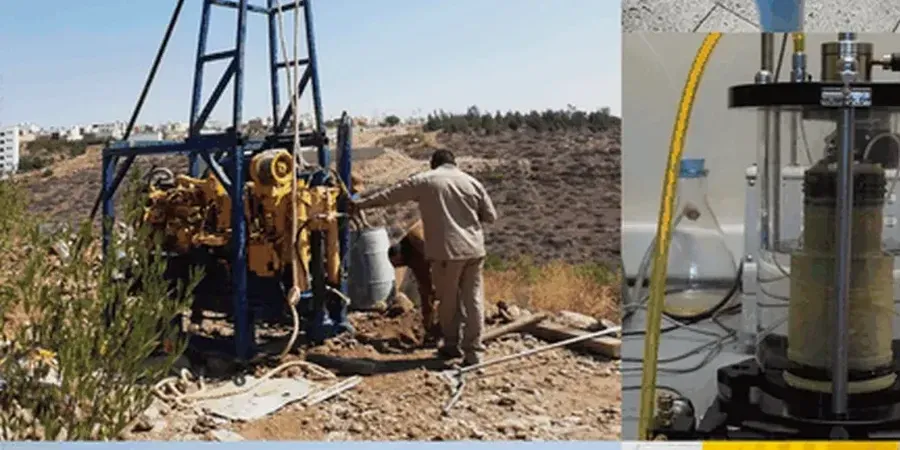
Guelph's subsurface is dominated by glacial deposits from the Wisconsinan glaciation, including the Port Stanley Till, which is a silty clay to clayey silt diamict with variable stone content, often overlying stratified sands and gravels of the Catfish Creek Formation. These soils can be dense but are frequently heterogeneous, with lenses of softer saturated silt or loose sand that pose differential settlement and bearing capacity challenges. The Eramosa River valley and surrounding drumlinized till plain create additional complexities, with fluctuating groundwater tables and occasional organic soils in low-lying areas. Understanding this stratigraphy is critical because standard shallow foundations often cannot meet performance requirements without ground improvement.
In Canada, ground improvement design must comply with the National Building Code of Canada and the Ontario Building Code, which reference CSA S6: Canadian Highway Bridge Design Code and the Canadian Foundation Engineering Manual. For seismic considerations, NBCC 2020 seismic hazard maps for Southern Ontario, including Guelph, dictate site-specific response analysis where loose saturated sands are present. Professional practice is governed by Professional Engineers Ontario, requiring P.Eng. stamping of all designs. Environmental compliance under the Ontario Environmental Protection Act also applies when techniques like grouting could interact with the Guelph aquifer system, a vital municipal water source.
Projects requiring ground improvement in Guelph span a wide range: low to mid-rise commercial buildings on former agricultural land, industrial warehouses with heavy floor loads, transportation corridors like Highway 6 widening, and stormwater management ponds where seepage control is essential. Stone column design is frequently employed to support structures on soft cohesive soils, providing drainage paths and reinforcing the matrix. For granular deposits with inadequate density, vibrocompaction design offers a proven method to reduce settlement and increase liquefaction resistance, particularly in the sandy outwash deposits found along Guelph's river corridors. Both techniques are integral to the broader category, addressing distinct soil conditions with precision.
Available services
Common questions
What is ground improvement and when is it necessary in Guelph?
Ground improvement refers to the modification of in-situ soils to enhance strength, stiffness, and permeability. In Guelph, it becomes necessary when glacial tills and outwash deposits exhibit excessive settlement potential, low bearing capacity, or liquefaction susceptibility under seismic loading, making them unsuitable for conventional shallow foundations without treatment.
Which ground improvement techniques are most suitable for Guelph's glacial soils?
The suitability depends on soil type and project loads. Stone columns effectively reinforce soft cohesive tills by creating stiff inclusions and drainage paths. Vibrocompaction is ideal for densifying loose granular deposits like sands and gravels. Other methods include deep soil mixing for contaminated sites and dynamic compaction for large, open areas.
How does the local geology affect ground improvement design in Guelph?
Guelph's Port Stanley Till and underlying stratified sediments are highly variable, with abrupt changes in consistency and grain size. This heterogeneity demands detailed site characterization to avoid under-designing in weak pockets or over-designing in dense zones, directly influencing the spacing, depth, and type of improvement elements.
What regulations govern ground improvement projects in Guelph?
Projects must adhere to the Ontario Building Code and National Building Code of Canada, which reference the Canadian Foundation Engineering Manual. Seismic designs follow NBCC 2020 hazard maps. All plans require P.Eng. stamping, and environmental regulations under the Ontario EPA apply if the work could affect the Guelph aquifer.