Guelph sits on a bedrock ridge where the Guelph Formation limestone controls groundwater flow across the entire Speed River valley. The 2023 city-wide groundwater monitoring report recorded hydraulic conductivity variations exceeding three orders of magnitude within a single borehole — that level of heterogeneity makes textbook values useless for design. Our team runs field permeability tests using the Lefranc method in overburden and the Lugeon procedure in fractured dolostone, delivering site-specific k-values that dewatering contractors and geotechnical engineers can trust. When the data feeds directly into a deep excavation dewatering plan or a basement drainage design, every decimal point in the permeability coefficient matters.
A single Lugeon test in fractured Guelph dolostone can reveal the difference between a dry excavation and a flooded one — the geology doesn't average.
Scope of work in Guelph
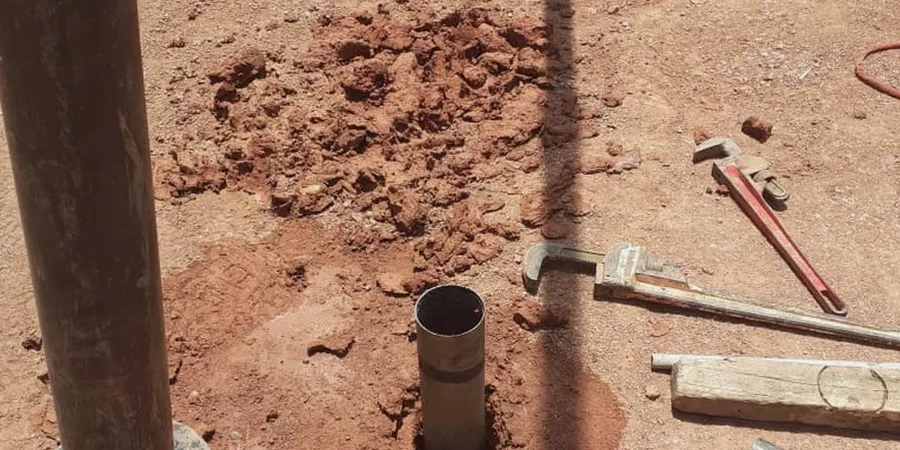
Local geotechnical conditions in Guelph
Guelph's limestone has been quarried since the 1830s, and historical maps show dozens of undocumented extraction sites now buried beneath residential subdivisions built between 1960 and 1985. When a new development encounters backfilled quarry workings or solution-weathered bedrock, the permeability contrast between natural and disturbed ground can short-circuit a dewatering system. We've seen cases where a single missed fracture zone tripled inflow rates during basement construction near the Speed River. Running staged Lugeon tests through the full depth of the proposed excavation — not just the bottom — catches these vertical flow conduits before they become construction delays. The Ontario Building Code references site-specific geotechnical investigation as the basis for drainage design, and our permeability data provides the quantitative input that satisfies both the code and the practical demands of keeping a site dry.
Our services
Our Guelph field permeability program covers the full workflow from test interval selection through data interpretation. Each service is executed by experienced field technicians working alongside the drilling contractor to ensure test integrity.
Lugeon Testing in Rock
Double-packer system isolating fractured intervals in the Guelph Formation. Five-stage pressure testing with real-time flow monitoring identifies dilation and washing behavior in solution-prone dolostone.
Lefranc Testing in Overburden
Constant-head and falling-head configurations for till, alluvium, and fill. We match the test method to the material — variable-head for low-permeability clays, constant-head for sandy lenses.
Dewatering Feasibility Assessment
Integration of permeability data with groundwater level monitoring to produce inflow estimates for open-cut and shored excavations. Practical recommendations for well spacing and pump capacity.
Common questions
What's the difference between a Lefranc and a Lugeon test?
The Lefranc test measures hydraulic conductivity in soil or highly weathered rock using an open borehole section, typically with constant-head or falling-head methods. The Lugeon test is specifically for rock masses — a double packer isolates a test interval, and water is injected under pressure in five stages. The Lugeon unit quantifies rock mass permeability: 1 Lu equals roughly 1 liter per minute per meter of test interval at 1 MPa pressure. In Guelph, we use Lefranc in the glacial till overburden and switch to Lugeon once the bit hits competent dolostone.
How much does a field permeability test program cost in Guelph?
How many test intervals do I need for a basement excavation in Guelph limestone?
We recommend testing every 3 to 5 meters through the weathered rock zone — typically the upper 8 to 15 meters in the Guelph Formation — plus at least one test in the more competent rock below the proposed excavation floor. If the borehole encounters cavities or zones of total drilling fluid loss, we add targeted tests at those depths. For a typical 6-meter-deep basement, expect four to five Lugeon intervals per investigation borehole.