Guelph sits on a complex mix of glacial till, outwash sands, and the porous Guelph Formation dolostone. Anyone who has excavated along the Speed River knows the subgrade can shift from stiff clay to loose silt within a few meters. That variability is the single biggest factor in flexible pavement performance here. Our team brings that local ground knowledge directly into the pavement design process, combining it with laboratory testing like CBR for road construction and grain size analysis to model how the asphalt and granular layers will actually behave under southern Ontario's freeze-thaw cycles. We stop guessing and start quantifying.
A pavement design is only as reliable as the subgrade characterization behind it. In Guelph, that means dealing with glacial geology head-on.
Scope of work in Guelph
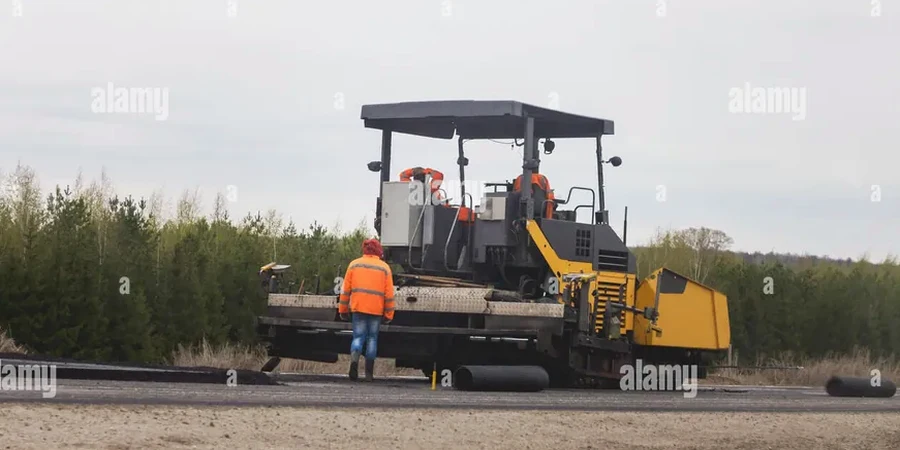
Local geotechnical conditions in Guelph
A mistake we see too often: the consulting engineer specifies a pavement structure based on a soil report from three lots away. In Guelph, that is a gamble. Two boreholes spaced 100 meters apart can hit completely different materials: dense Halton Till at one location, loose Speed River alluvium at the other. If the design uses an overestimated subgrade modulus, the asphalt will fatigue prematurely and the granular base will rut. The fix is not thicker asphalt; it is a targeted site investigation with enough coverage to map the variability. We also see contractors compacting granular base on saturated, unprotected subgrade during spring construction, trapping moisture that freezes and heaves the pavement within the first winter. Ontario's MTO standards exist precisely to prevent these failures, but they only work when the geotechnical input is site-specific and the construction QA follows through.
Our services
Our pavement design support covers the full sequence from subgrade investigation to construction verification. We work alongside the project's civil engineer or directly with the contractor to produce buildable, defensible pavement packages.
Subgrade Investigation and CBR Testing
Borehole drilling and Shelby tube sampling at proposed road and parking lot alignments, followed by laboratory soaked CBR tests to determine the design resilient modulus. We map soil variability along the alignment and recommend any localized subgrade treatments before the granular base is placed.
Pavement Structural Design and Layer Optimization
Calculation of required asphalt, base, and subbase thicknesses using the AASHTO 1993 method with local calibration factors. We evaluate alternative cross-sections, including full-depth asphalt and stabilized base options, and prepare OPSS-compliant material and compaction specifications.
Common questions
What CBR value is typical for Guelph subgrades?
It ranges widely. Halton Till typically gives soaked CBR values between 5% and 10%, which is workable for most flexible pavement designs. Sandy outwash deposits can exceed 15%. However, the silty clay found in some low-lying areas near the Speed and Eramosa rivers can drop to 2% or 3% CBR, requiring either a thicker aggregate base, subgrade stabilization with lime or cement, or a geotextile separation layer. We never assume a value without laboratory testing of undisturbed samples from the specific site.
How do you account for frost action in the pavement design?
Guelph experiences significant frost penetration, typically 1.2 to 1.5 meters in an average winter. Our designs ensure the total thickness of the pavement structure (asphalt plus granular base and subbase) equals or exceeds the expected frost depth, or that the subgrade is classified as non-frost-susceptible. We follow the frost protection criteria in the MTO Pavement Design Manual and use local climate data from Environment Canada to select the appropriate freezing index for the design.
What does a flexible pavement design package cost for a typical Guelph commercial site?
Can you evaluate an existing pavement that is failing?
Yes. We perform pavement condition surveys, dynamic cone penetrometer (DCP) testing through the asphalt and base layers, and sample recovery to identify the failure mechanism. Common causes in Guelph include inadequate subgrade preparation, base contamination from fines migration, and drainage deficiencies. We then provide a rehabilitation design, which may include partial or full-depth reclamation, base reinforcement, or asphalt overlay with interlayer strategies.